


My Son Sanctuary: Discovering Cham Pa relics and special cultural experiences


My Son Sanctuary is an ancient temple tower complex that preserves many unique imprints of Cham Pa culture in the Central region.Not only impressed by the unique architecture and sculpture, My Son relic is also attractive with Cham dances rich in identity. Let's explore My Son and combine the journey to experience Co Tu culture at Dong Giang Heaven Gate.
My Son Sanctuary preserves a unique Cham Pa cultural imprint
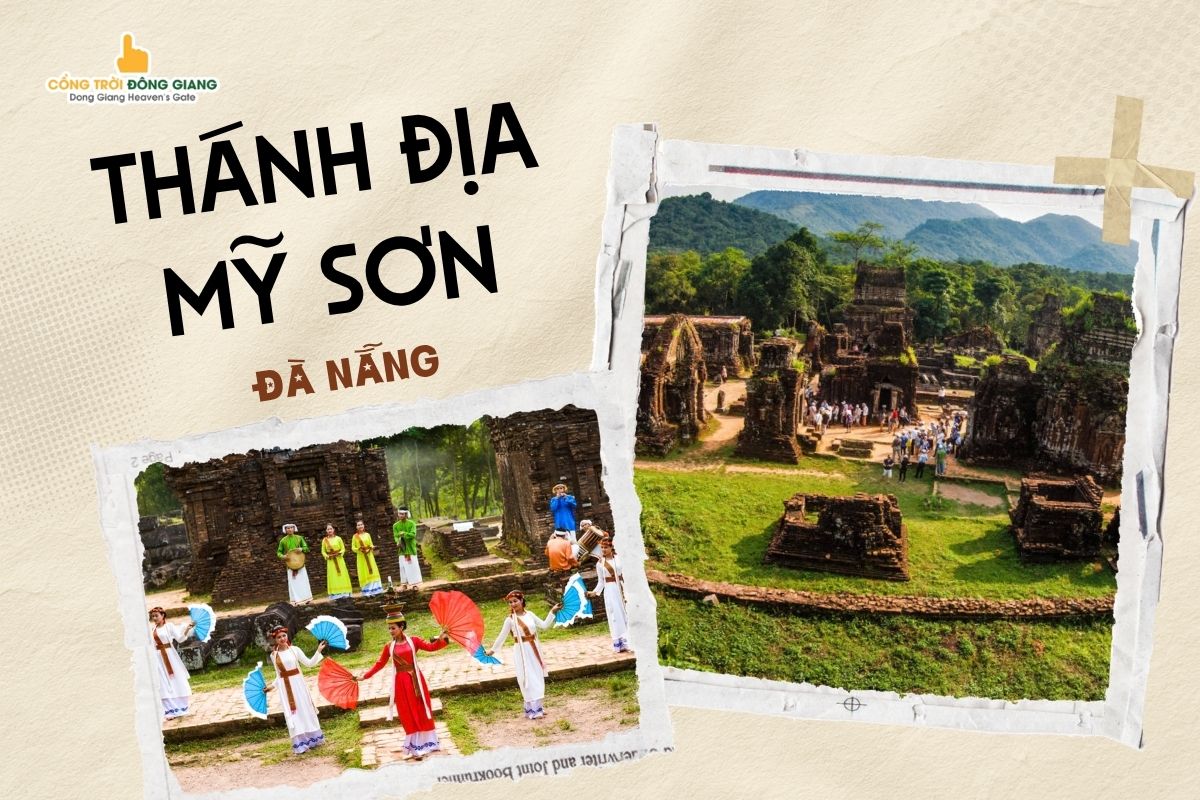
Where is My Son Sanctuary located and what is its history?
Nestled in a green valley surrounded by mountains and forests, the mecca impresses from the first moment by the ancient brick towers that stand out in the spacenature is quiet. This was an important religious and political center of the Champa kingdom for centuries, preserving precious traces of the spiritual, architectural and artistic life of the ancient Cham people.
1.1 Location of My Son relic site
My Son relic site is located in Duy Phu commune, Duy Xuyen district, Quang Nam province, in a valley surrounded by mountains.The location near the upstream of Thu Bon River creates a space that is both tranquil and majestic, with ancient towers that stand out in the green of the mountains and forests.
From a distance, My Son brings quite different beauty when the ancient buildings are not in the middle of the city but nestled in the middle of nature.Walking through the paths leading to the relics, visitors can slowly explore each tower cluster, admire the ancient architectural lines and feel more clearly the quiet beauty of the land that used to be the Champa cultural center.
The ancient beauty of the sanctuary
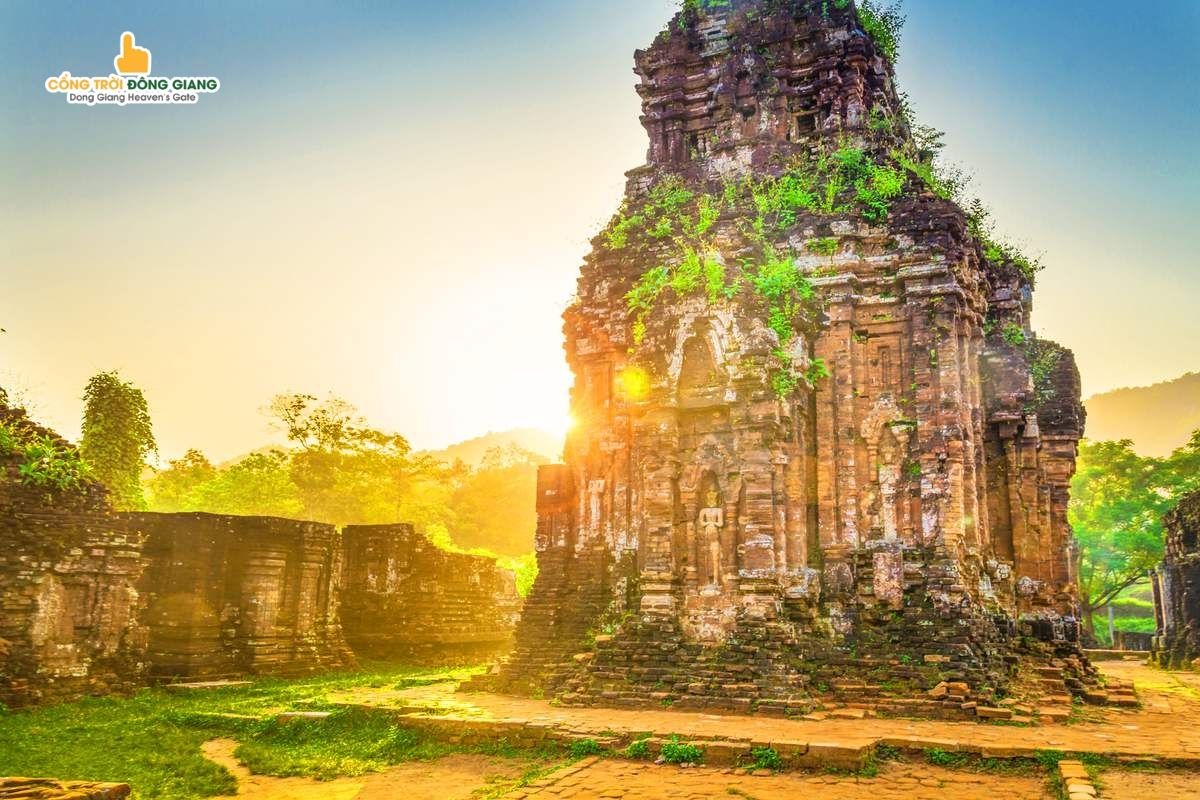
1.2 Historical mark of My Son Sanctuary
The sanctuary was formed around the fourth century and continues to be built and expanded over the centuries.It used to serve as an important religious center of the Champa kingdom, with a system of temples and towers mainly dedicated to Hindu gods, especially Shiva. The remaining vestiges reflect the religious life and the development of Champa art through each historical period.
Over time, the war and the upheavals of history damaged many buildings, but what remains still shows the scale and level of a civilization that once flourished in the Central region.Today, the ancient tower clusters in My Son continue to be studied, preserved, and become a destination for visitors to learn more deeply about the history and culture of Cham Pa.
>> See more: Da Nang check-in location is popular with tourists
1.3 Heritage value of My Son relic site
The value of My Son relic is clearly shown through architecture, sculpture and religious imprints preserved on each work.The brick spires, sandstone reliefs and decorative images of gods, mascots and patterns show a unique combination of Hindu influence and Champa artistic identity.
In 1999, the mecca was inscribed on the UNESCO World Heritage List, affirming the outstanding value of the population to Southeast Asian history and culture.To this day, My Son is still one of the typical destinations to explore the Cham Pa culture, where visitors can see the vestiges of an ancient civilization through each brick, tower and heritage space between the mountains and forests.
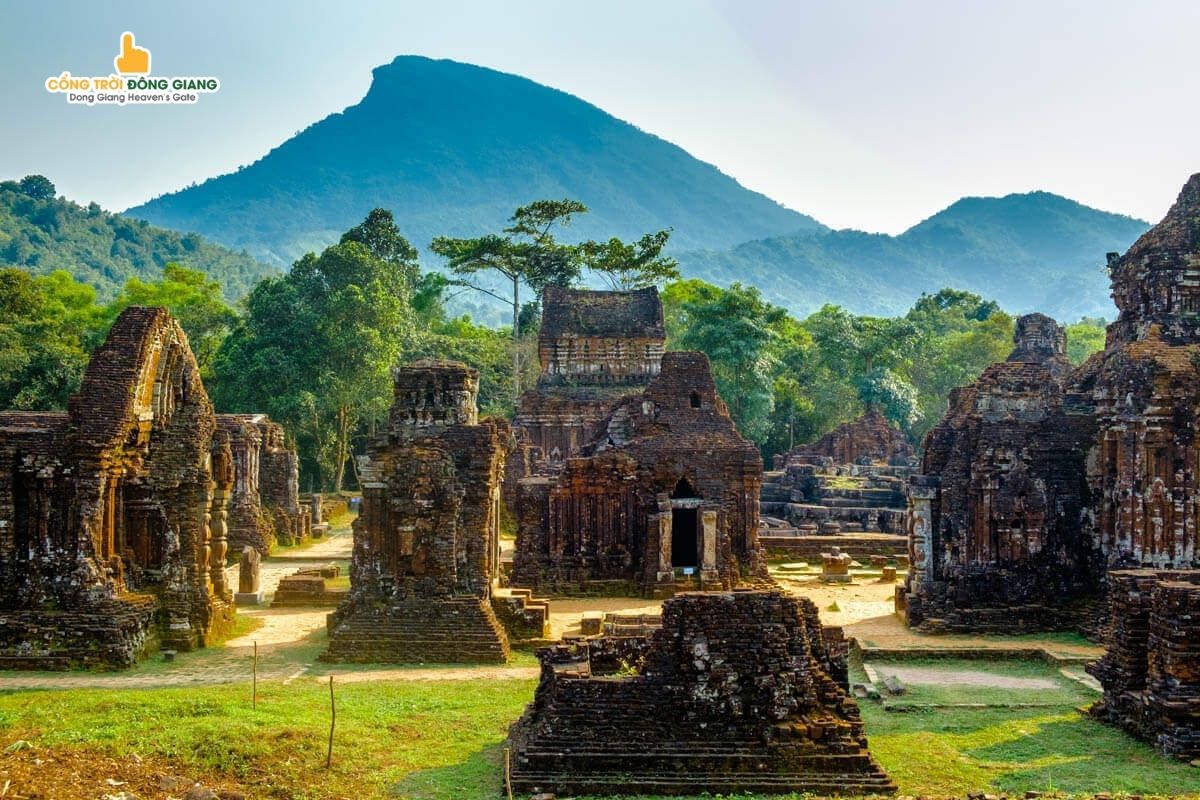
Recognized by UNESSCO as a World Cultural Heritage
What is special about Cham tower architecture in My Son sanctuary?
The ancient brick towers in the middle of the green valley are the image that makes the holy place's own attraction.The works were built through many stages, with different characteristics but still unified in the Cham Pa architectural style.From the height of the tower, the miniature roofs to the exquisite reliefs and patterns, each detail contributes to telling the story of a civilization that once flourished in the Central region.
The towers have the imprint of Champa
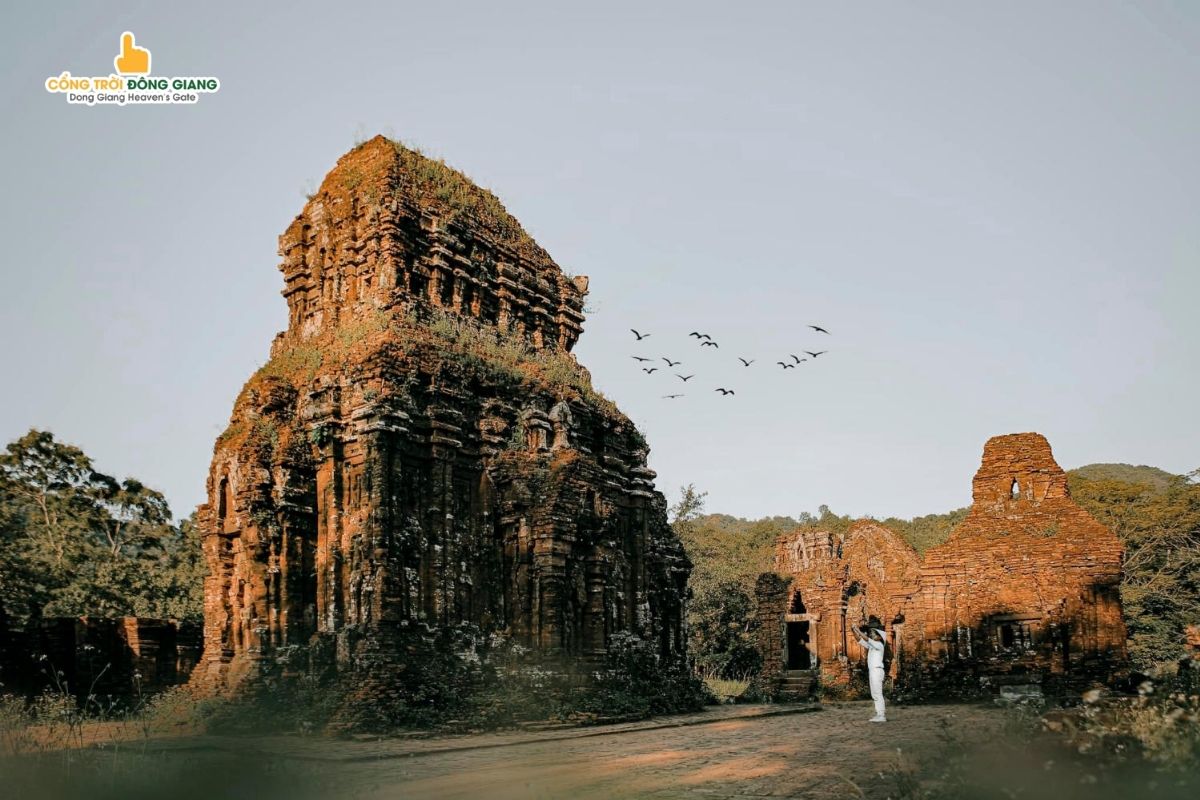
The temples and towers in My Son are built mainly of fired bricks, with many clusters of different sizes and ages.The main tower often holds a central position, surrounded by sub-towers and related works, forming a complex for the religious life of the Cham people.The tower is high, the body is firm, the roof is gradually reduced towards the top to create the feeling of the building rising to the middle of the valley.
Each group of towers has its own features in shape, pattern and layout, reflecting the change of Cham Pa art over time.The dark red brick walls stand out between the green of trees and mountains, creating a scene that is both ancient and impressive, making the journey to visit My Son a fascinating heritage discovery experience.
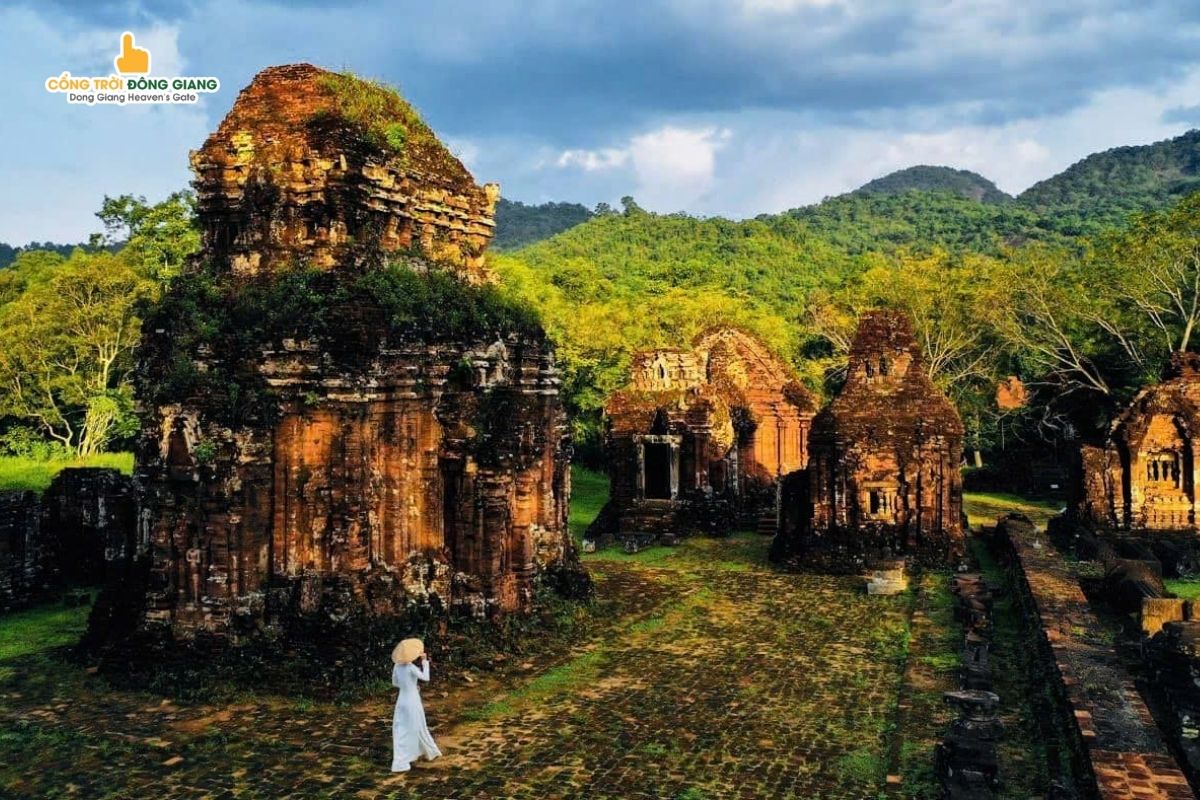
The spires of time
Sculpture on temples
Besides the ancient tower blocks, sculpture is a factor that creates depth for My Son architecture.On the tower body, temple doors and architectural components, visitors can see images of Hindu gods, mascots, Apsara dancers and many plant patterns and religious symbols.The lines are vividly displayed, reflecting the rich religious life of the ancient Champa residents.
In particular, the image of the dancer and the decorative reliefs bring a soft look to the works that have a majestic and solid appearance.Observing each piece of carving, visitors can feel the talented hands of Cham Pa artisans, and understand more about the religious and artistic worldviews that once existed in this holy place.
The extremely sophisticated sculptural art of the Cham people
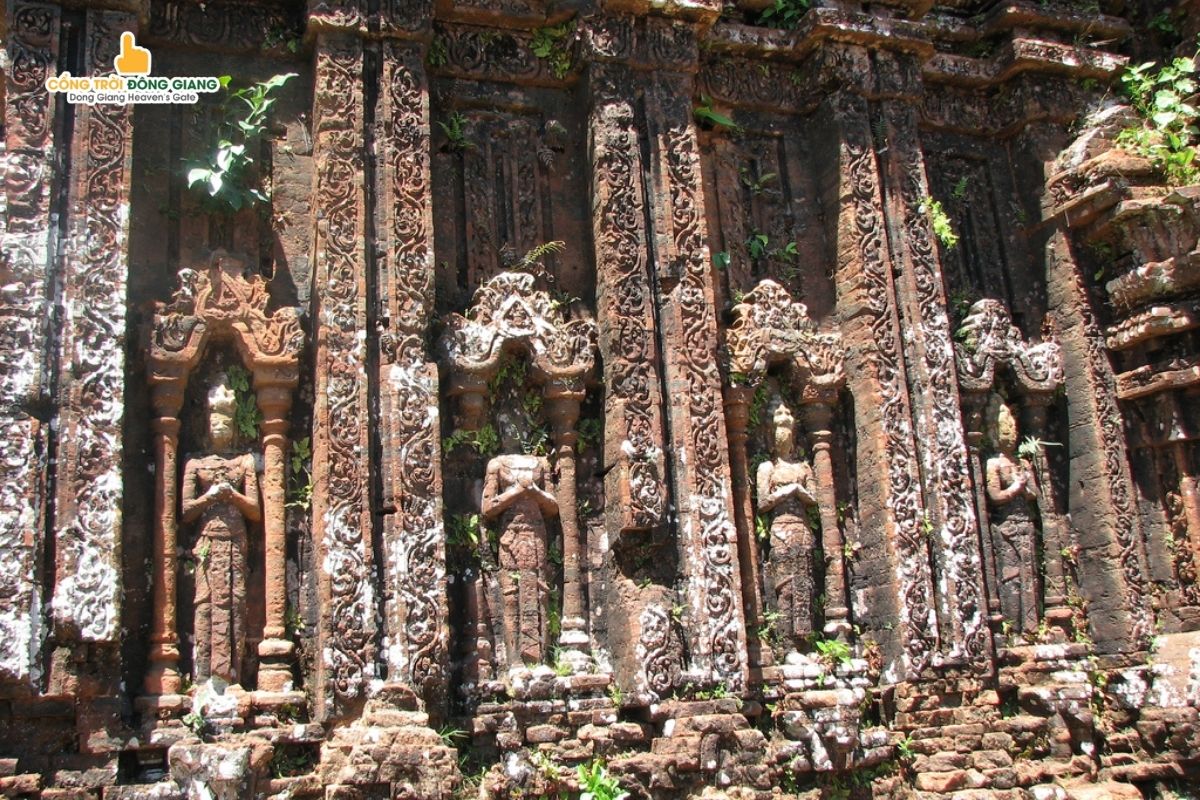
Construction techniques create a unique feature of My Son
One of the points that made My Son architecture interested is the brick construction technique of the Cham people. The bricks are cleverly arranged, creating walls with a seamless surface and sharp architectural lines.Despite having spent centuries in the harsh climatic conditions of the Central region, many parts of the works still retain their characteristic architectural traces.
Brick is not the only material that makes up the appearance of My Son. Sandstone is also used in many architectural departments and sculptures, creating a harmonious combination of texture and art.It is the sophistication in the use of materials and special construction techniques that has contributed to the uniqueness of the sanctuary, an important mark in Champa architecture.
Brick construction techniques of the ancient Cham people
Enjoy Cham dance in the middle of the heritage space
One of the memorable experiences when coming to My Son is enjoying Cham dance right in the middle of the ancient temple space.Dancers in traditional costumes mix with drums, music and flexible movements, bringing a vivid perspective on Cham Pa culture. Visitors can better feel the beauty of traditional art through each movement:
- Traditional Cham costumes: The colorful costumes and characteristic jewelry create outstanding beauty for the performances in the middle of the ancient brick tower.
- Soft dance movements: The movements of the hands, feet and body posture are rhythmically combined, showing the charm and sophistication in the art of Cham dance.
- The sound is bold: Drums and traditional instruments create a characteristic rhythm, blending with the movement of the dancer and the ancient space around him.
- Special performance space: The dances take place among hundreds of years old temple complexes, creating an interesting connection between traditional art and heritage space, making the experience of visiting My Son more lively.
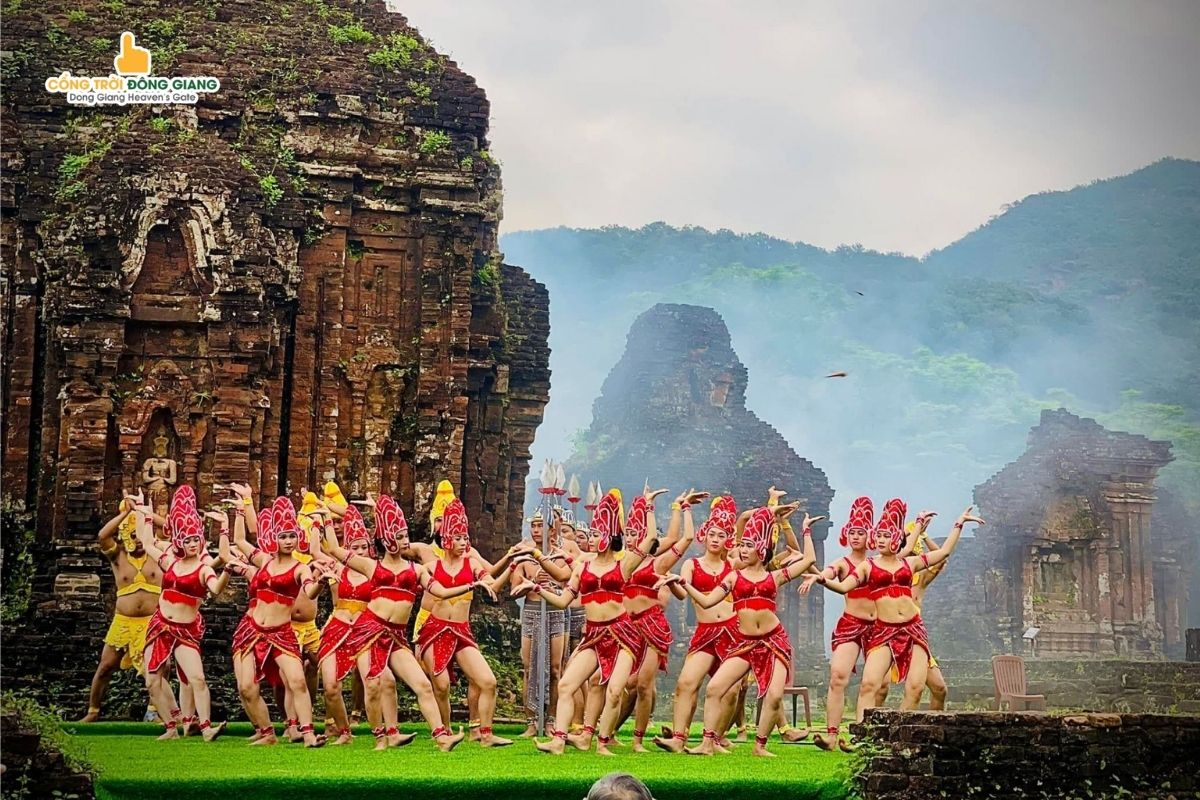
Enjoy Cham dance with each flexible dance
>> Add: <a class="in-cell-link" href="https://congtroidonggiang.com/vi/cham-vao-sac-mau-van-hoa-cham-va-co-tu-2026-n97" target="_blank" rel="noopener">Khi tháp cổ gặp đại ngàn: Chạm vào sắc màu văn hóa Chăm và Cơ Tu tại Ngày hội Đông Giang 2026
Từ thánh địa Mỹ Sơn đến Cổng Trời Đông Giang, tiếp nối hành trình khám phá văn hóa miền Trung
Nếu thánh địa Mỹ Sơn mở ra những dấu ấn cổ xưa của văn hóa Chăm Pa qua đền tháp, điêu khắc và nghệ thuật múa Chăm, thì Cổng Trời Đông Giang mang đến một sắc màu khác của miền Trung qua đời sống và văn hóa Cơ Tu. Hai điểm đến nằm giữa những không gian thiên nhiên đặc trưng, giúp du khách có thêm góc nhìn về sự đa dạng văn hóa đã tạo nên nét riêng cho vùng đất miền Trung.
Khám phá văn hóa Cơ Tu tại Cổng Trời Đông Giang
Tại Làng Văn hóa Cơ Tu, du khách có cơ hội tìm hiểu đời sống và phong tục của cộng đồng Cơ Tu thông qua những hoạt động gần gũi, giàu tính tương tác. Một số trải nghiệm nổi bật có thể tham gia gồm:
- Tìm hiểu trang phục Cơ Tu: Khám phá những bộ trang phục truyền thống với hoa văn, màu sắc đặc trưng và tìm hiểu thêm về nét đẹp văn hóa trong đời sống cộng đồng.
- Giao lưu cồng chiêng và Tung Tung Dá Dá: Lắng nghe tiếng trống chiêng và hòa vào vòng múa Tung Tung Dá Dá, cảm nhận không khí cộng đồng đặc trưng của người Cơ Tu.
- Gói bánh sừng trâu: Tự tay thực hiện các công đoạn gói bánh dưới sự hướng dẫn của người dân địa phương, qua đó hiểu thêm về một nét ẩm thực truyền thống.
- Tham gia các hoạt động cộng đồng: Thử sức với đi cà kheo, nhảy sạp và nhiều hoạt động giao lưu được tổ chức tại Làng Văn hóa Cơ Tu.
Khi màn đêm xuống, “Vũ Điệu Đại Ngàn” tiếp tục mang văn hóa Cơ Tu đến gần du khách qua âm nhạc, vũ điệu và sân khấu thực cảnh. Sau chương trình, không khí tại Làng Văn hóa Cơ Tu vẫn tiếp tục sôi động với hoạt động lửa trại, nơi du khách có thể cùng giao lưu, nhảy múa và tận hưởng buổi tối giữa không gian núi rừng.
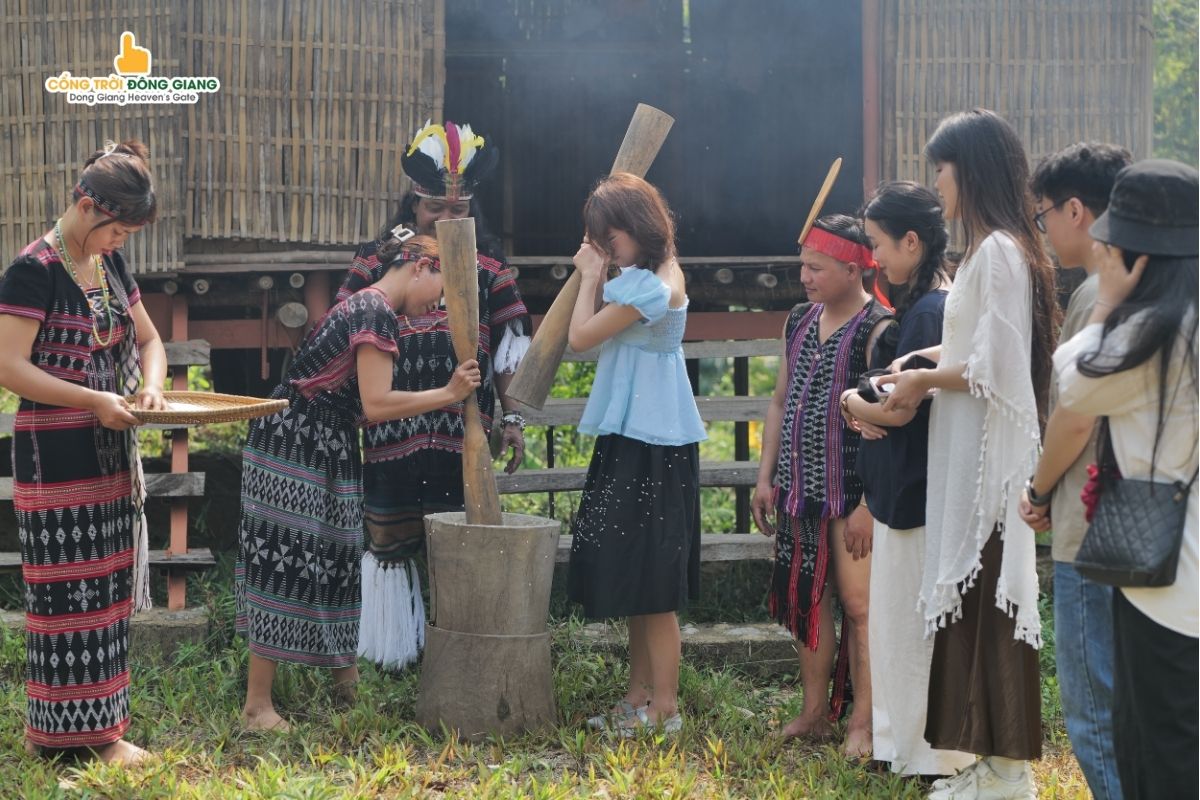
Giao lưu văn hóa cùng đồng bào Cơ Tu
Kết hợp khám phá di sản và thiên nhiên trong một hành trình
Kết hợp thánh địa Mỹ Sơn và Cổng Trời Đông Giang là gợi ý phù hợp cho du khách muốn khám phá nhiều sắc màu văn hóa miền Trung. Hành trình có thể bắt đầu với không gian di sản Chăm Pa tại Mỹ Sơn, sau đó tiếp tục đến Đông Giang để khám phá thiên nhiên và văn hóa Cơ Tu.
Tại Cổng Trời Đông Giang, du khách có thể dành thời gian trải nghiệm:
- Ngắm cảnh từ Cầu Kính Ngọc Rồng: Thu trọn núi rừng Đông Giang từ độ cao hơn 800m, đặc biệt ấn tượng vào những ngày nhiều mây.
- Khám phá thác và suối: Tản bộ giữa không gian xanh mát, tìm đến những dòng thác tự nhiên và tận hưởng bầu không khí trong lành của đại ngàn.
- Chèo SUP: Trải nghiệm hoạt động trên mặt nước tại Thác Tiên hoặc Thác Trứng Rồng, phù hợp với những du khách yêu thích khám phá và vận động.
- Khám phá văn hóa Cơ Tu: Kết thúc hành trình bằng những hoạt động giao lưu tại Làng Văn hóa Cơ Tu, thưởng thức nghệ thuật và gặp gỡ đồng bào địa phương.
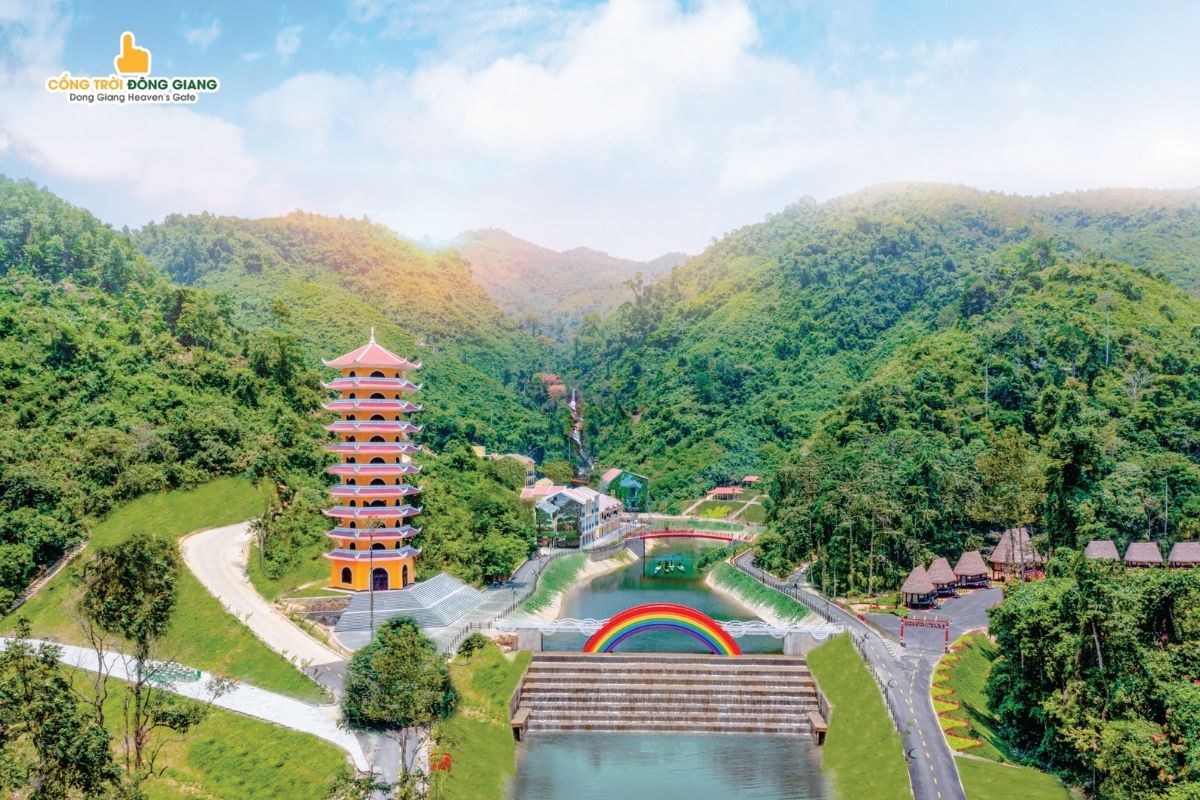
Thiên nhiên trong lành tại Cổng Trời Đông Giang
Từ những dấu tích Champa cổ xưa đến không gian núi rừng và văn hóa Cơ Tu đương đại, hành trình Mỹ Sơn và Cổng Trời Đông Giang mang đến hai lát cắt khác nhau về miền Trung. Đây cũng là cách để chuyến đi vừa có chiều sâu về văn hóa, vừa có thêm những trải nghiệm thiên nhiên và khám phá thú vị.
Thánh địa Mỹ Sơn lưu giữ những dấu ấn đặc sắc của văn hóa Chăm Pa qua đền tháp cổ, nghệ thuật điêu khắc và những điệu múa Chăm giàu bản sắc. Nếu muốn tiếp tục khám phá văn hóa miền Trung theo một sắc màu khác, du khách có thể kết hợp hành trình đến Cổng Trời Đông Giang để hòa mình vào thiên nhiên đại ngàn và tìm hiểu văn hóa Cơ Tu qua những trải nghiệm gần gũi, sinh động.
Có thể bạn quan tâm:
- Tour Cổng Trời Đông Giang 2 ngày 1 đêm khách sạn 4* GIÁ TỐT
- Cập nhật bảng giá vé Cổng Trời Đông Giang mới nhất 2026
- Kinh nghiệm đi Cổng Trời Đông Giang 2026 đầy đủ nhất


